Select your language



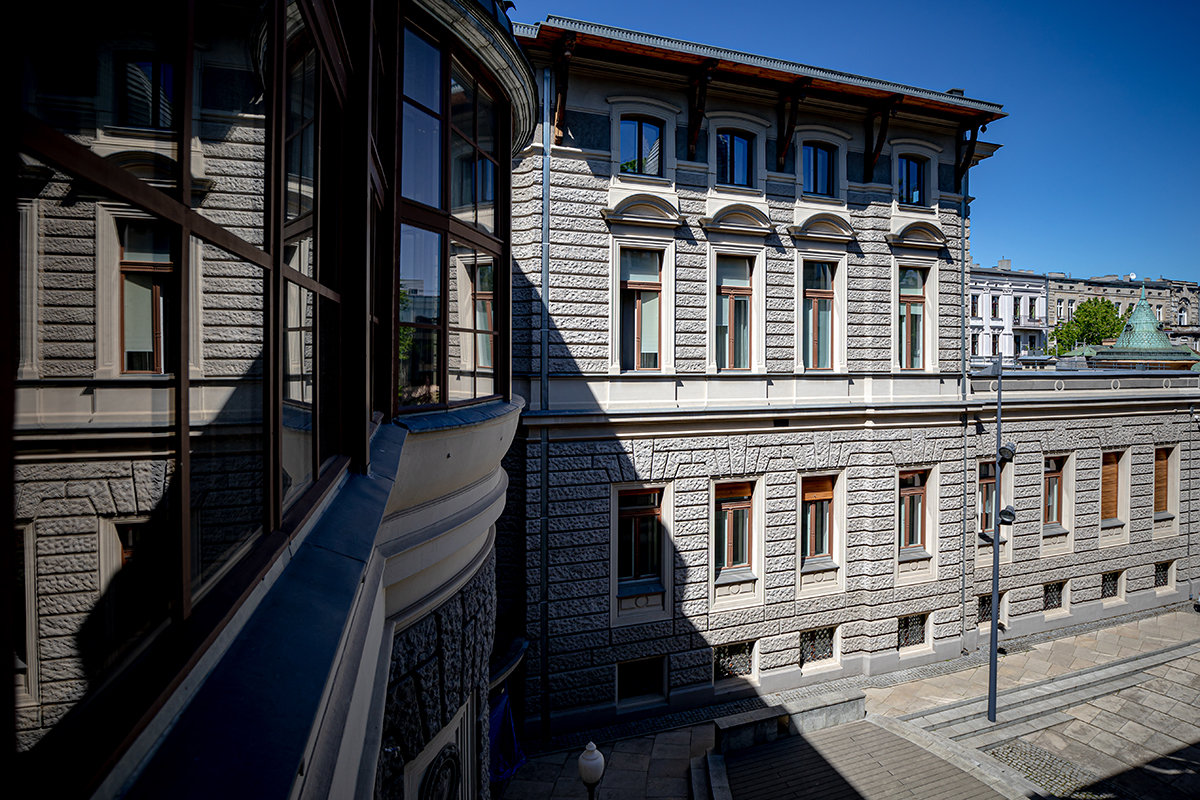
The Academy's headquarters is a historic palace located at 32 Gdańska Street, built in 1904-1908 for Karol Poznański – the son of the famous Łódź manufacturer Izrael Kalmanowicz Poznański and one of the directors of a joint-stock cotton products company.
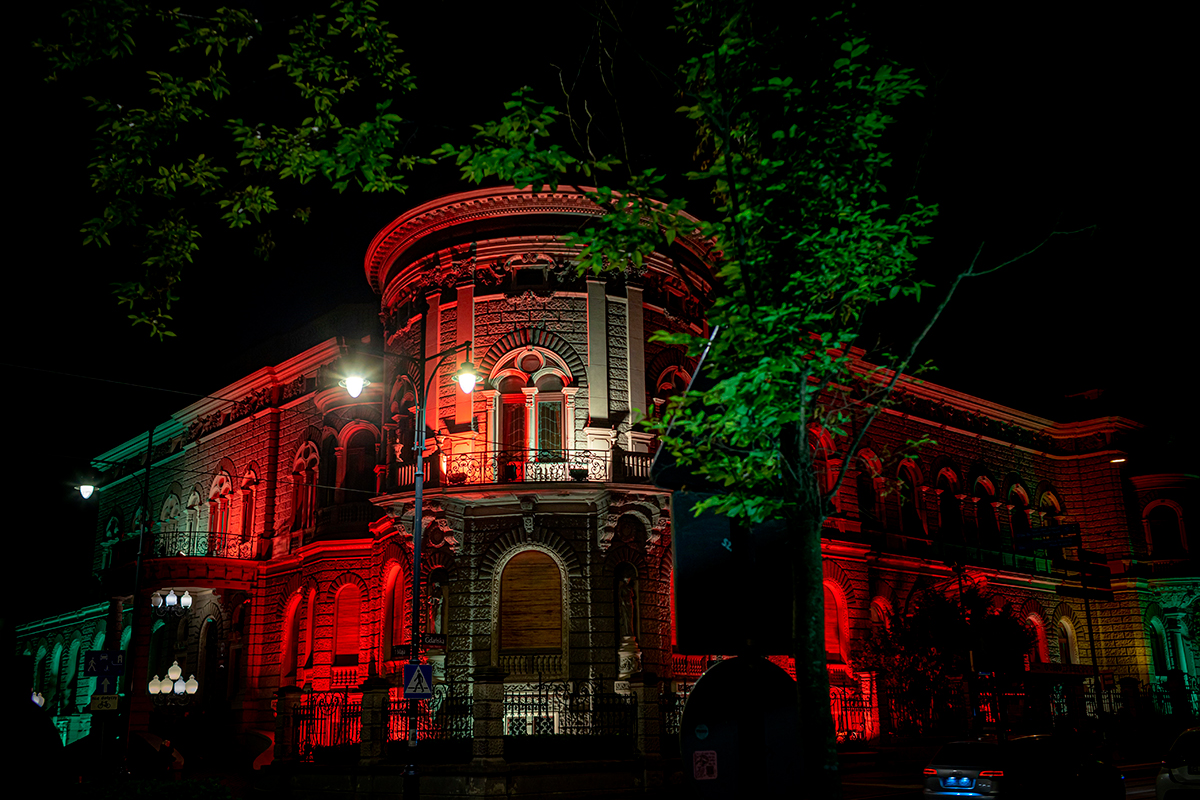
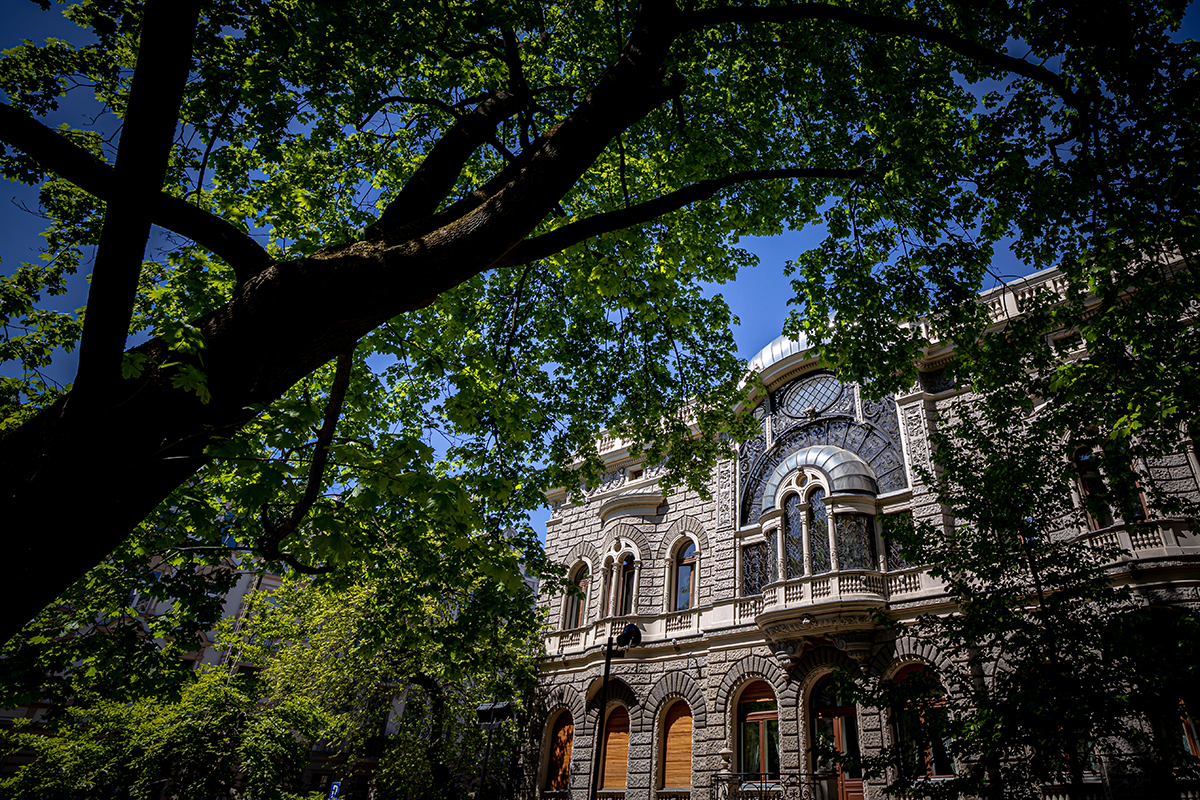
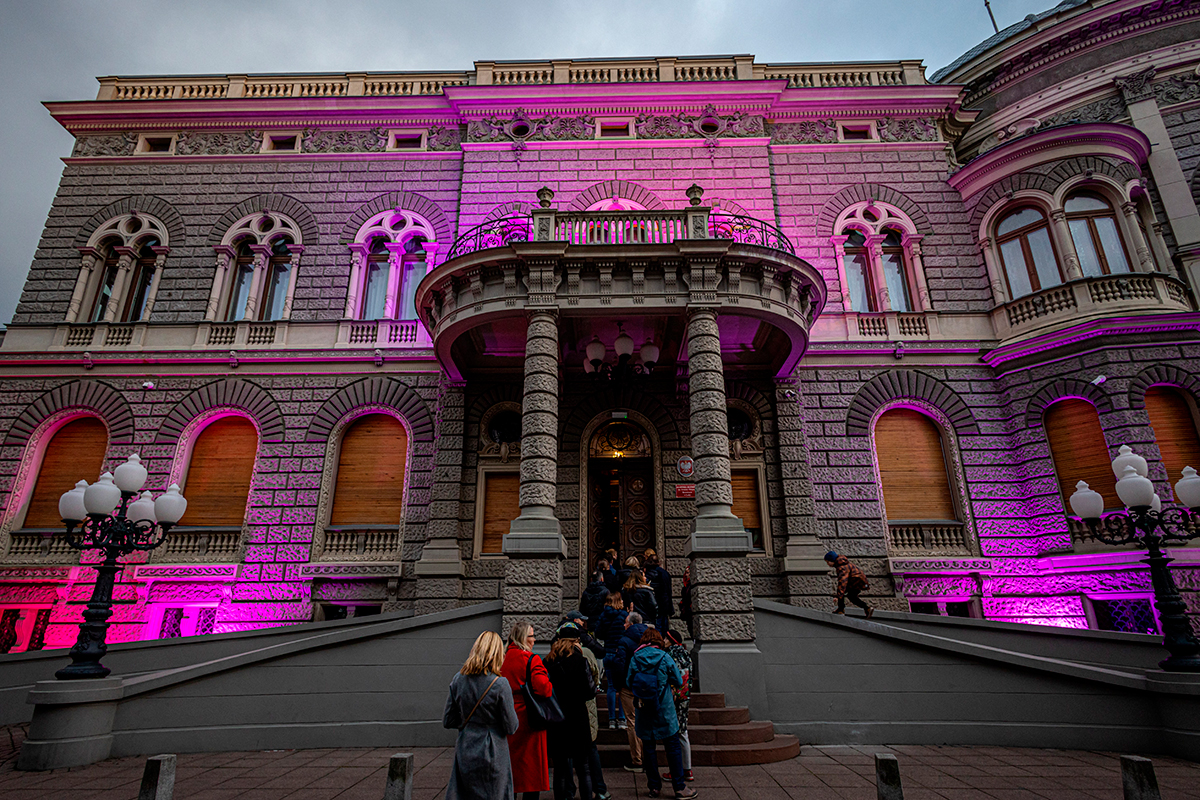
Built according to Adolf Zeligson's design, the building is eclectic in character: it combines predominant elements of Italian Renaissance and Baroque architecture with Art Nouveau motifs, among others. The palace was designed on a U-shaped plan as a single-story building with high basements and a residential attic. It consists of two side wings and a front section, where both floors once housed representative rooms: living and dining rooms (today concert halls and lecture rooms) as well as glass-enclosed lounges, offices, boudoirs, and a billiard room. On the first floor, there is also a winter garden covered with an impressive glass roof, visible from the south side of the building.
The rooms in the side wing were used by the household, while the basements contained utility rooms and a central heating boiler room (it was the first building in Łódź to have central heating already at the design stage). The attic was home to the servants, today it contains practice rooms.
The building has three entrances: a representative entrance with a driveway and arcades from 1 Maja Avenue, an entrance from Gdańska Street, which formerly led to the ground floor and basements, and a utility entrance from the courtyard. A recognizable element of the palace is the semicircular risalit located in the corner, covered with a flattened dome.
The palace and the small park surrounding it (formerly a garden, which also included an orangery) with a guardhouse located in the courtyard are surrounded by a decorative fence with mascarons and the letter P on the coat of arms plaques.
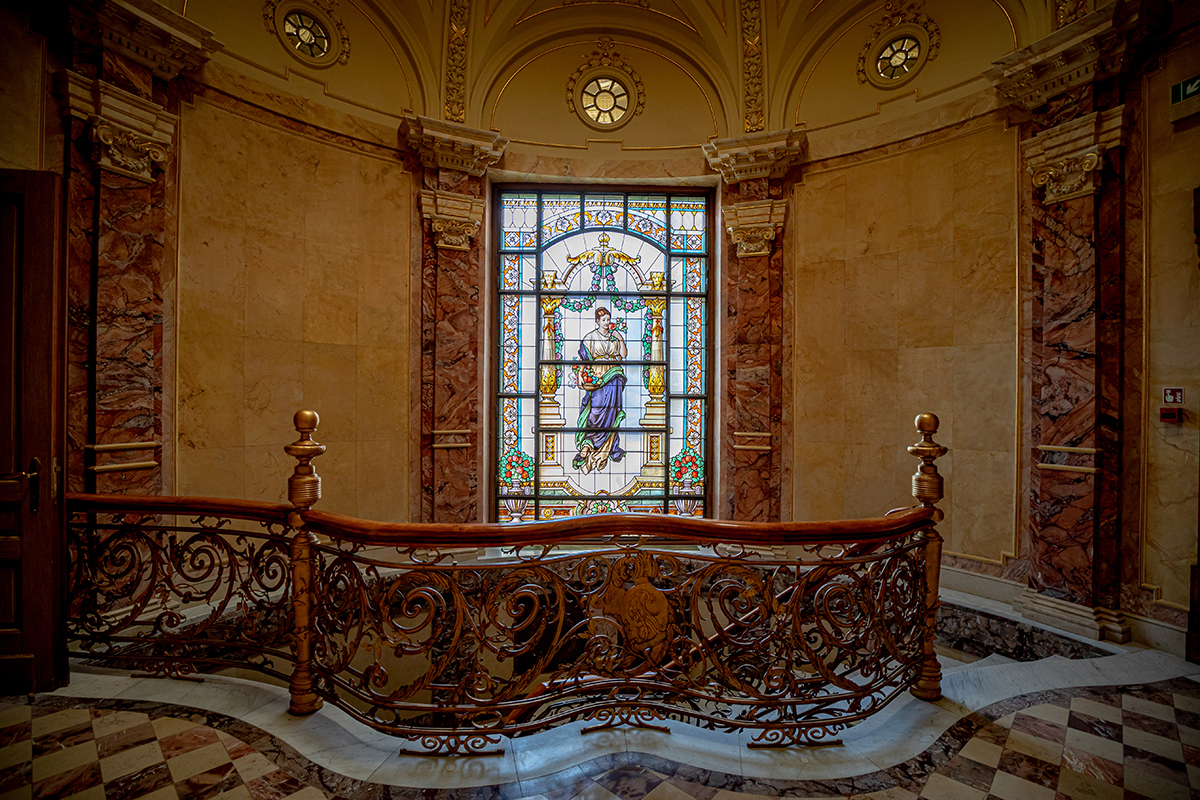
The magnificent interiors of the residence have retained much of their splendor to this day: paneling made of various types of wood, stucco ceilings, decorative moldings, stained glass windows, marble fireplaces, chandeliers, sconces, and furniture. The interior staircase, lined with dark marble, with fan-shaped steps running along the wall and an ornate wrought-iron balustrade, is particularly striking. The staircase is decorated with a stained glass window from Richard Schlein’s workshop in Zittau.
The palace was designed as a residential building for one family and servants. Over time, the families of the company's shareholders also moved in. During the occupation of Poland, it housed the German Städtische Musikschule, which operated almost until the end of 1944. (The sheet music copies taken over by the academic library after the war are stamped with the school's full name: Städtische Musikschule, Litzmanstadt, Danziger Str. 32).
The building became the headquarters of the Academy of Music from the moment it was established in the early weeks of 1945. As Kazimierz Wiłkomirski, the Academy's first rector, wrote in his book “Memoirs” (Wspomnienia), the city authorities originally intended to allocate the building to the Workers' Cultural Center. The decision was changed thanks to the strenuous efforts of Prof. Helena Kijeńska-Dobkiewiczowa, who was then the vice-rector. In its early years, the Academy shared the building with the Secondary Music School and the Lodz Film School.
Currently, the palace houses concert halls, lecture and practice rooms for students (also in the guardhouse building), an Electronic Music Computer Studio, and an Electroacoustic Laboratory. This is where the Academy's highest authorities and administration are based.